


If you’re a Quebec homeowner looking to upgrade your heating system, you’ve probably noticed heat pumps are everywhere these days. And for good reason. They’re efficient, they can both heat and cool, and with our province’s temperature swings, that versatility matters.
But here’s where it gets tricky: you’ve got two main options to choose from. Ductless systems (those wall-mounted units you see in more and more homes) and ducted systems (the traditional central heating approach). The comparison of ductless and ducted systems isn’t just about picking the cheaper option. It’s about what actually works for your home, your budget, and Quebec’s climate.
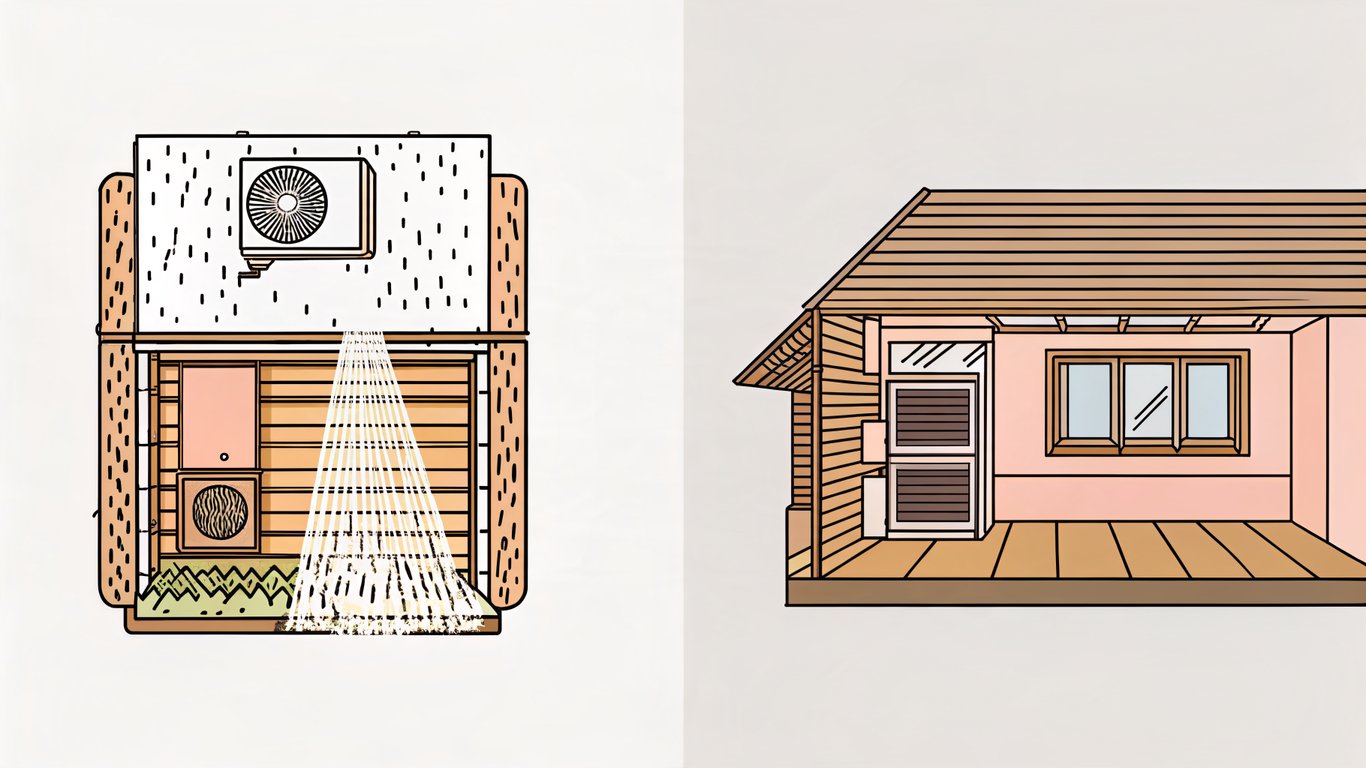
Why Heat Pumps Are Gaining Popularity in Quebec
Quebec’s energy landscape has shifted. With rising electricity rates and growing environmental awareness, homeowners are looking for smarter heating solutions. Heat pumps can deliver heating at a fraction of the cost of electric baseboards or oil furnaces.
The provincial and federal governments have noticed this trend too. Programs like Rénoclimat and the Canada Greener Homes Grant offer substantial rebates for heat pump installations. These incentives can significantly reduce your upfront costs, making the switch more accessible.
Plus, modern heat pumps work surprisingly well in cold climates. We’re not talking about the systems from 20 years ago that struggled below -10°C. Today’s cold-climate models can extract heat from outdoor air even when it’s -25°C or colder.
What This Comparison Will Cover
We’re going to break down everything you need to know to make an informed decision. You’ll learn how each system actually works, what installation looks like in a Quebec home, and what you can expect to pay (both upfront and over time).
We’ll also look at performance in our specific climate, because what works in Vancouver doesn’t necessarily work in Trois-Rivières. And we’ll help you figure out which system makes sense for your particular situation, whether you’re in a 1950s bungalow in Montreal or a newer home in Quebec City.
System Fundamentals: How Each Type Works
Ductless (Mini-Split) Heat Pump Systems Explained
A ductless system consists of an outdoor unit (the compressor) connected to one or more indoor units (air handlers) mounted on your walls. These components are linked by refrigerant lines that run through small holes in your exterior walls.
The outdoor unit does the heavy lifting, extracting heat from outside air in winter and dumping heat outside in summer. The indoor units then distribute that conditioned air directly into your rooms. Each indoor unit operates independently, which means you can heat your bedroom to 20°C while keeping the living room at 22°C.
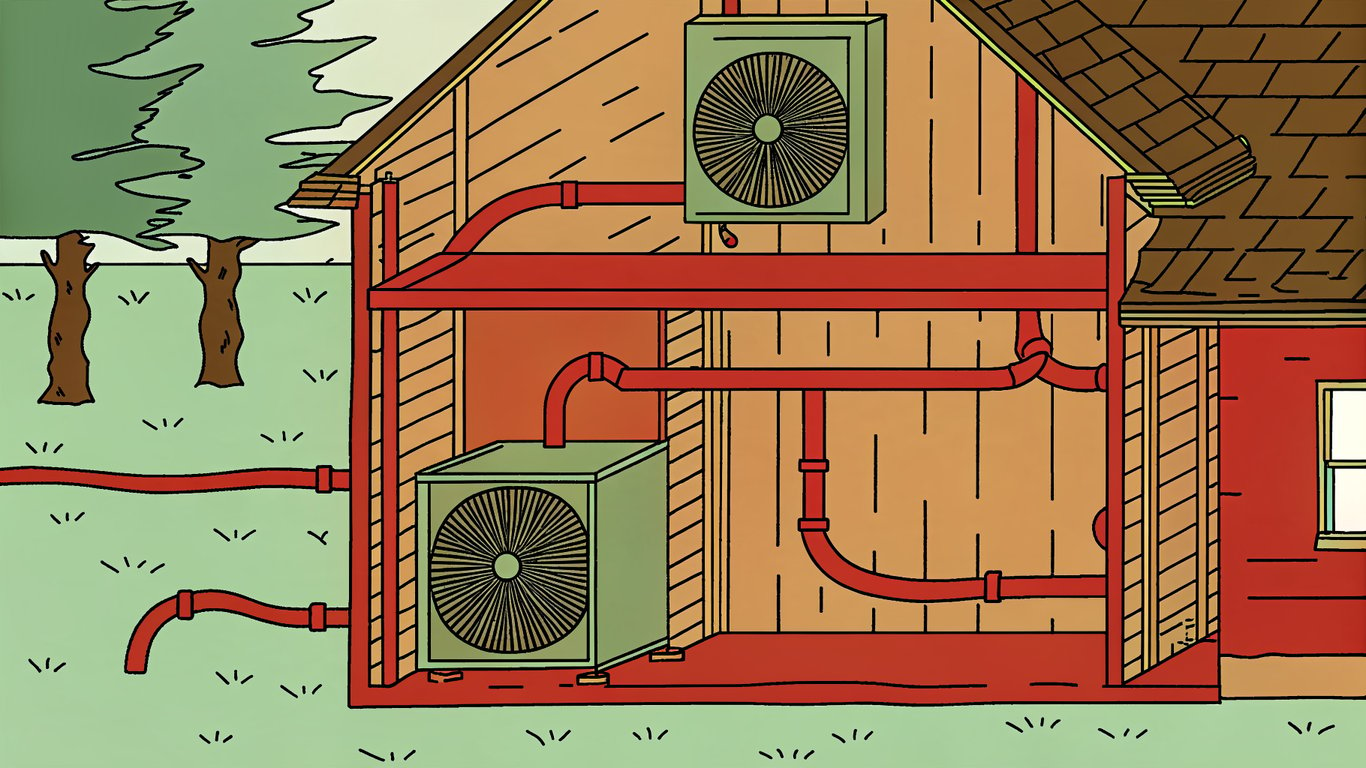
Brands like Mitsubishi, Daikin, and Fujitsu dominate the ductless market, each offering various models designed for different climates and home sizes.
Ducted (Central) Heat Pump Systems Explained
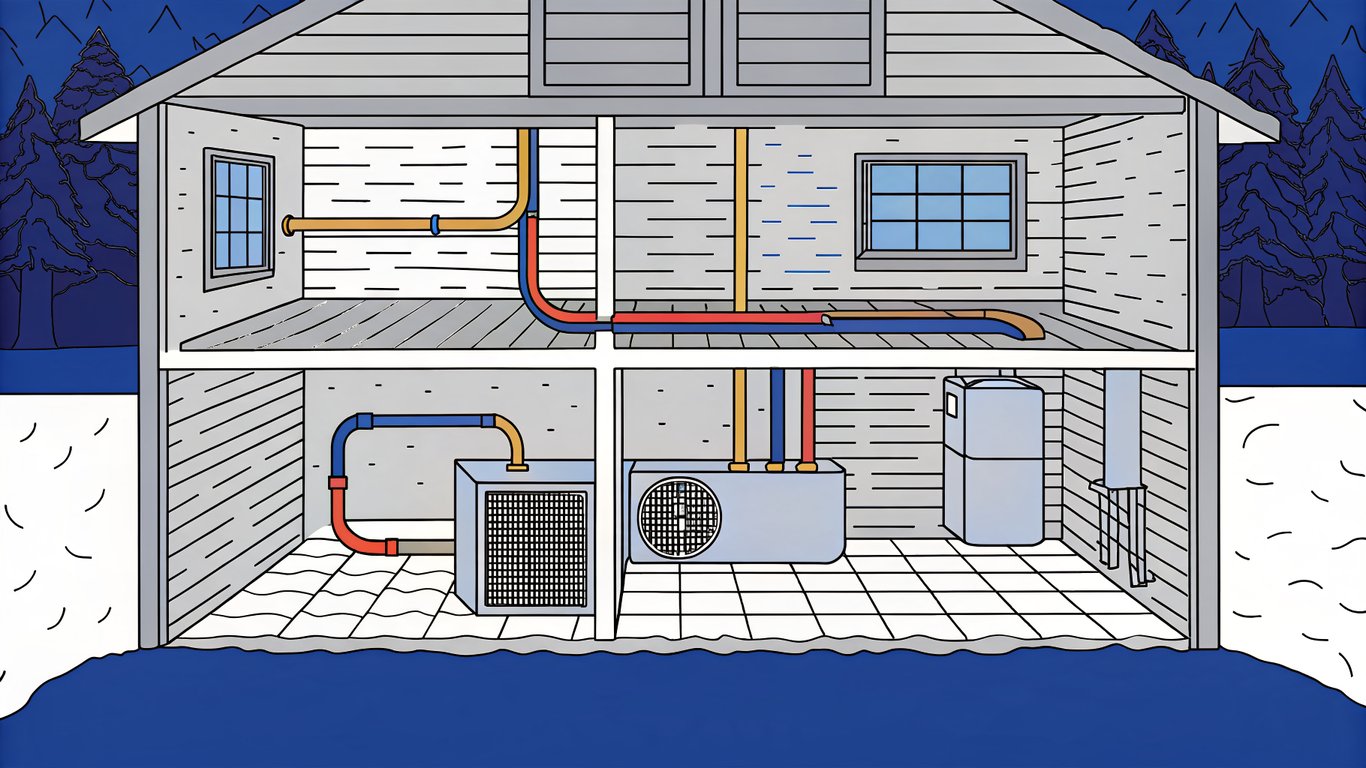
Ducted systems work similarly to ductless in terms of the heat pump technology itself. You’ve got an outdoor unit doing the heating and cooling work. But instead of wall-mounted units in each room, the conditioned air travels through a network of ducts hidden in your walls, floors, or ceilings.
A central air handler (usually in your basement or utility room) pushes air through these ducts to vents in each room. It’s the same distribution method used by traditional furnaces and central air conditioners. If your home already has ductwork from a previous heating system, a ducted heat pump can often use that existing infrastructure.
Key Operational Differences
The fundamental difference comes down to air distribution. Ductless systems deliver air directly where it’s needed, with minimal energy loss. Ducted systems push air through a network of passages, which can lose some efficiency along the way (especially if those ducts aren’t well-insulated).
Ductless systems excel at zone control. Each indoor unit operates independently with its own thermostat. Ducted systems typically heat or cool the entire house to one temperature, though you can add zone dampers for more control (at additional cost).
Installation Complexity and Requirements
Ductless System Installation Process
Installing a ductless system is relatively straightforward. The installer mounts the outdoor unit on a concrete pad or wall bracket outside your home. Then they drill a small hole (typically 3 inches in diameter) through your exterior wall for each indoor unit.
The refrigerant lines, electrical wiring, and condensate drain run through these holes to connect the outdoor and indoor units. The indoor units mount on brackets attached to your wall, usually high up near the ceiling for optimal air circulation.
For a single-zone system (one outdoor unit, one indoor unit), installation typically takes one day. Multi-zone systems with three or four indoor units might take two days. There’s minimal disruption to your home, and you don’t need to tear into walls or ceilings beyond those small penetrations.
Ducted System Installation Process
If your home already has ductwork, installing a ducted heat pump is fairly simple. The installer connects the new outdoor unit to your existing air handler and ductwork. This scenario typically takes one to two days.
But if you don’t have existing ducts? That’s a different story. Installing new ductwork means running metal or flexible ducts through your walls, floors, or attic. This requires cutting into drywall, potentially modifying framing, and then patching everything back up. We’re talking about a week or more of work, depending on your home’s layout.
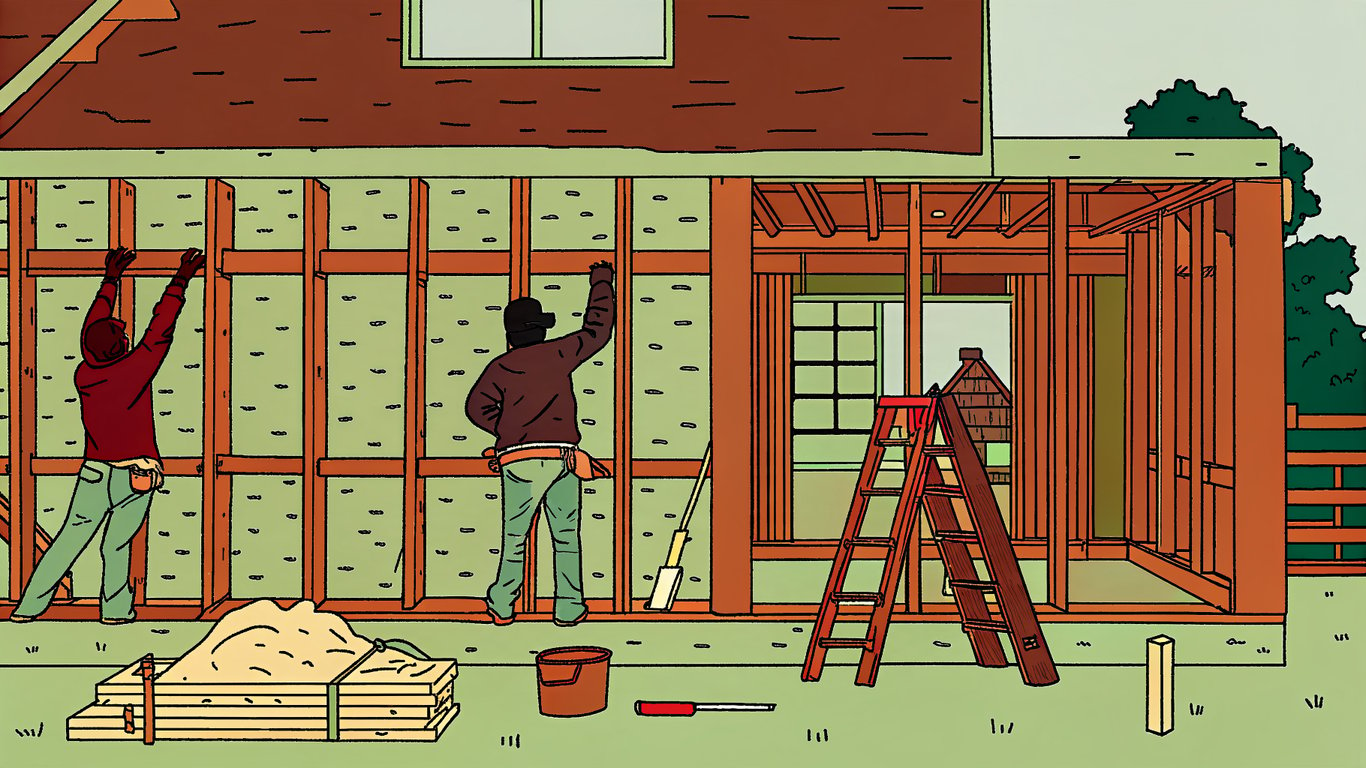
The complexity increases significantly in finished basements or homes with limited access to wall cavities and ceiling spaces.
Installation Challenges Specific to Quebec Homes
Many Quebec homes, particularly older ones, weren’t built with central air conditioning in mind. Bungalows from the 1950s and 1960s often lack the ceiling height or attic space needed for traditional ductwork. Heritage homes in neighborhoods like Old Quebec or Westmount present additional challenges due to preservation requirements.
Quebec’s building codes also require proper insulation around any ductwork to prevent condensation and heat loss. In our climate, poorly insulated ducts in an unheated attic or crawl space can lose significant efficiency.
Professional Requirements and Permits
In Quebec, anyone working on your heating system needs a valid license from the Régie du bâtiment du Québec (RBQ). Don’t hire someone without proper credentials. It’s not just about quality work; unlicensed installations can void warranties and create insurance issues.
Most municipalities require permits for heat pump installations. Your contractor should handle this paperwork, but verify they’re doing so. Permit requirements ensure the installation meets electrical and building codes.
Cost Analysis: Initial Investment and Long-Term Expenses
Upfront Costs: Equipment and Installation
Ductless systems typically cost less upfront if you’re covering a smaller area. A single-zone ductless system might run between $3,000 and $6,000 installed, depending on the brand and capacity. Multi-zone systems covering an entire home can range from $8,000 to $15,000 or more.
Ducted systems vary widely based on whether you have existing ductwork. If you do, expect to pay $6,000 to $12,000 for the heat pump and installation. Without existing ducts, you’re looking at $15,000 to $25,000 or higher, because you’re essentially paying for two projects: the ductwork installation and the heat pump system.
These are rough estimates. Your actual costs depend on your home’s size, insulation quality, the specific equipment chosen, and local labor rates.
Operating Costs and Energy Efficiency
Both system types can be highly efficient, but ductless systems have a slight edge. Because they deliver air directly to rooms without duct losses, they typically achieve better real-world efficiency. Ductwork can lose 20-30% of heating or cooling energy if it’s not properly sealed and insulated.
Look for systems with high SEER (Seasonal Energy Efficiency Ratio) ratings for cooling and HSPF (Heating Seasonal Performance Factor) ratings for heating. Modern cold-climate heat pumps often achieve SEER ratings of 20+ and HSPF ratings of 10+.
Your monthly operating costs depend heavily on Hydro-Québec rates and how you use the system. But many homeowners report heating cost reductions of 30-50% compared to electric baseboards or oil furnaces.
Maintenance and Repair Costs
Ductless systems require regular filter cleaning (monthly during heavy use) and annual professional maintenance. Expect to pay $150-$300 per year for professional servicing. The filters are washable, so there’s no ongoing filter replacement cost.
Ducted systems need similar annual maintenance, plus regular filter replacements (typically every 1-3 months). Professional servicing costs are comparable, but you’ll spend an additional $50-$150 annually on filters. Ductwork should also be inspected and cleaned periodically, which can cost several hundred dollars every few years.
Both systems typically last 15-20 years with proper maintenance, though outdoor units in Quebec’s harsh climate might need replacement slightly sooner.
Quebec Rebates and Incentives
The Rénoclimat program offers rebates for heat pump installations, with amounts varying based on the system type and your home’s energy efficiency improvements. You’ll need a pre- and post-renovation energy evaluation to qualify.
The Canada Greener Homes Grant provides up to $5,000 for eligible home energy retrofits, including heat pumps. Combined with provincial programs, these incentives can cover a significant portion of your installation costs.
Some municipalities and Hydro-Québec also offer additional rebates or financing programs. Check with your local utility and municipal government for current offerings.
Return on Investment Timeline
Your payback period depends on what you’re replacing. If you’re switching from oil heat or electric baseboards, you’ll probably see payback in 5-10 years through energy savings alone. If you’re replacing a relatively efficient natural gas furnace, the payback period extends to 10-15 years or more.
Factor in the added cooling capability (if you didn’t have AC before) and potential home value increase, and the financial picture improves. But don’t expect immediate savings if you’re coming from an efficient existing system.
Performance Comparison in Quebec’s Climate
Cold Weather Performance (-25°C and Below)
This is where Quebec homeowners get nervous. Can heat pumps really handle our winters? The answer is yes, but with caveats.
Cold-climate heat pumps from manufacturers like Mitsubishi, Fujitsu, and others are specifically designed to operate in temperatures well below freezing. Many models maintain heating capacity down to -25°C or even -30°C.
However, their efficiency drops as temperatures fall. A heat pump that’s incredibly efficient at -5°C will work harder and use more electricity at -25°C. This is normal and expected.
Most Quebec homeowners keep their existing heating system (electric baseboards, furnace) as backup for the coldest days. The heat pump handles the majority of the heating season, and the backup system kicks in during extreme cold snaps.
Heating Efficiency Throughout Winter
For typical Quebec winter temperatures (-5°C to -15°C), modern heat pumps perform excellently. They’ll provide all the heat your home needs while using significantly less electricity than resistance heating.
Both ductless and ducted systems use the same heat pump technology, so their cold-weather performance is comparable. The difference comes down to heat distribution. Ductless systems might create slightly uneven temperatures between rooms, while ducted systems provide more uniform heating throughout the house.
Cooling Performance in Summer
Quebec summers can be hot and humid, especially in Montreal and the St. Lawrence Valley. Both system types provide excellent cooling, but again, the distribution differs.
Ductless systems cool the rooms where they’re installed very effectively. If you have units in your main living areas and bedrooms, you’ll be comfortable. Rooms without units might not cool as well.
Ducted systems cool the entire house more evenly, assuming your ductwork is properly sized and balanced. They also tend to handle humidity better because all the air passes through the central unit’s dehumidification system.
Zoning and Temperature Control
This is where ductless systems shine. Each indoor unit has its own remote control and thermostat. You can keep bedrooms cooler at night, warm up the living room in the morning, and adjust each space independently.
Ducted systems typically operate as a single zone, heating or cooling the whole house to one temperature. You can add zone dampers and multiple thermostats, but this increases complexity and cost. Even with zoning, ducted systems don’t offer the same room-by-room control as ductless.
Pros and Cons: Comprehensive Comparison
Ductless Heat Pump Advantages
- Superior energy efficiency with no duct losses, potentially reducing heating costs by 30-50%
- Flexible installation that works in homes without existing ductwork, requiring only small wall penetrations
- Excellent zone control allowing different temperatures in each room based on individual preferences
- Quick installation typically completed in 1-2 days with minimal disruption to your home
- Ideal for additions and renovations where extending ductwork would be impractical or expensive
- Quiet operation with indoor units producing minimal noise compared to forced-air systems
Ductless Heat Pump Disadvantages
- Visible wall units that some homeowners find aesthetically unappealing, though modern designs are improving
- Multiple indoor units needed for whole-home coverage, which can add up in cost and visual impact
- Higher upfront cost per room compared to adding vents in a ducted system
- Uneven heating or cooling in rooms without units, requiring strategic placement planning
- Regular filter maintenance required for each indoor unit, though filters are washable
- Limited air filtration compared to ducted systems with whole-home filtration options
Ducted Heat Pump Advantages
- Hidden components with only vents visible, maintaining your home’s aesthetic
- Whole-home comfort with even temperature distribution throughout all rooms
- Integration with existing systems if you already have ductwork from a furnace or AC
- Superior air filtration options including HEPA filters and air purifiers at the central unit
- Familiar operation similar to traditional furnaces, with standard thermostats
- Better humidity control with all air passing through the central dehumidification system
Ducted Heat Pump Disadvantages
- Significantly higher installation costs if your home doesn’t have existing ductwork, potentially $15,000-$25,000+
- Energy losses through ductwork of 20-30% if ducts aren’t properly sealed and insulated
- Less flexible zoning typically heating or cooling the entire house to one temperature
- More invasive installation requiring extensive work if adding new ductwork
- Ongoing filter costs with replacements needed every 1-3 months
- Ductwork maintenance including periodic cleaning and sealing to maintain efficiency
Side-by-Side Comparison Table
| Factor | Ductless Systems | Ducted Systems |
|---|---|---|
| Installation Cost (with existing ducts) | $8,000-$15,000 whole home | $6,000-$12,000 |
| Installation Cost (without ducts) | $8,000-$15,000 whole home | $15,000-$25,000+ |
| Installation Time | 1-2 days | 1-2 days (with ducts), 1+ week (without) |
| Energy Efficiency | Excellent (no duct losses) | Good (potential duct losses) |
| Zone Control | Excellent (per room) | Limited (whole home or added zones) |
| Aesthetics | Visible wall units | Hidden (vents only) |
| Maintenance | Filter cleaning monthly | Filter replacement monthly, duct cleaning periodically |
| Best For | Homes without ducts, renovations, zone control needs | Homes with existing ducts, new construction, whole-home comfort |
Suitability Assessment: Which System Is Right for Your Quebec Home?
Best Scenarios for Ductless Systems
Ductless makes the most sense if you’re living in an older Quebec home without existing ductwork. Installing ducts in a 1950s bungalow or a century home in Old Montreal would be prohibitively expensive and disruptive.
They’re also perfect for additions and renovations. Adding a bedroom over your garage? A single ductless unit provides heating and cooling without extending your ductwork. Finishing your basement? Same story.
If you have specific rooms that need climate control (a home office, master bedroom, or living room), ductless systems let you target those spaces without conditioning the entire house. This targeted approach can save energy if you’re not using all rooms equally.
Best Scenarios for Ducted Systems
If you’re building a new home or doing a major renovation where walls are already open, ducted systems make excellent sense. The installation cost drops significantly when you’re already doing construction work.
Homes with existing ductwork from a furnace or central AC are prime candidates. You’re essentially swapping out the outdoor unit and possibly the air handler, using infrastructure that’s already in place.
If aesthetics are a priority and you can’t stand the idea of wall-mounted units, ducted systems keep everything hidden. You’ll only see vents, just like a traditional heating system.
Home Type Considerations
Quebec bungalows from the post-war era typically lack ductwork and have limited attic space. Ductless systems work beautifully in these homes. You might install units in the main living area, bedrooms, and basement, creating comfortable zones throughout.
Split-level homes can be tricky for either system. Ductless requires multiple units to cover different levels, while ducted systems need careful duct design to balance airflow across elevation changes.
Larger homes (2,500+ square feet) might benefit from ducted systems for more even comfort, though multi-zone ductless installations can work well too. Smaller homes and condos are often perfect for ductless, especially if you only need to condition a few key rooms.
Lifestyle and Preference Factors
Think about how you use your home. Do different family members prefer different temperatures? Ductless systems accommodate these preferences easily. Does everyone agree on one temperature? Ducted systems work fine.
Noise sensitivity matters too. Ductless indoor units are quiet, but you’ll hear a gentle hum when they’re running. Ducted systems are even quieter in living spaces since the air handler is typically in the basement or utility room.
If you’re planning to sell your home soon, consider what buyers in your area expect. In some Quebec neighborhoods, central heating systems (ducted) are the norm and might appeal more to buyers. In others, efficient ductless systems are increasingly popular.
Hybrid Solutions
You don’t have to choose just one approach. Some homeowners use ducted systems for their main living areas and add ductless units for additions, finished basements, or rooms that are hard to reach with ductwork.
Others install ductless systems for primary heating and cooling while keeping their existing furnace as backup for the coldest winter days. This hybrid approach maximizes efficiency while ensuring comfort during extreme weather.
Making Your Decision: Action Steps for Quebec Homeowners
Getting Accurate Quotes and Assessments
Get at least three quotes from different contractors. Each should include a home assessment where they evaluate your insulation, existing heating system, electrical capacity, and specific needs.
Ask contractors to explain their equipment recommendations. Why are they suggesting a particular brand or model? How did they calculate the required heating and cooling capacity? A good contractor will show their work, not just hand you a number.
Watch for red flags: quotes that seem too good to be true, contractors who don’t ask about your home’s insulation or heating needs, or anyone pushing you to decide immediately. Quality installations require careful planning.
Choosing a Qualified Installer in Quebec
Verify the contractor holds a valid RBQ license. You can check this on the Régie du bâtiment du Québec website. Don’t skip this step. Unlicensed work can void equipment warranties and create liability issues.
Look for contractors with specific cold-climate heat pump experience. Installing heat pumps in Quebec isn’t the same as installing them in milder climates. Your installer should understand local challenges like extreme cold, ice buildup, and proper drainage for condensate in freezing conditions.
Ask for references from recent installations in your area. Contact those homeowners and ask about their experience, the installation quality, and how the system performs in winter.
Timeline and Planning Considerations
Spring and fall are typically the best times for installation in Quebec. Contractors are less busy than during peak summer (AC installations) or winter (emergency heating repairs), and you can test the system in both heating and cooling modes before extreme weather arrives.
Plan for the Rénoclimat evaluation process if you’re pursuing rebates. You’ll need a pre-renovation evaluation before installation and a post-renovation evaluation after. This adds time to your project but can save thousands in rebates.
If you’re coordinating with other home improvements (new windows, insulation upgrades, roof work), tackle those first. Your heat pump should be sized based on your home’s final insulation levels, not the current state.
Final Recommendation Framework
Here’s a simple way to think about your decision. If your home has existing ductwork in good condition and you want whole-home comfort with hidden components, ducted systems probably make sense.
If you don’t have ductwork, want superior zone control, or need to heat and cool specific areas without a major renovation, ductless systems are likely your best bet.
The comparison of ductless and ducted systems ultimately comes down to your specific situation. There’s no universally « better » option. Both technologies work well in Quebec’s climate when properly installed and maintained.
Take your time with this decision. Talk to multiple contractors, get detailed quotes, and think about how you actually use your home. The right heat pump system will keep you comfortable for the next 15-20 years, so it’s worth getting it right the first time.